
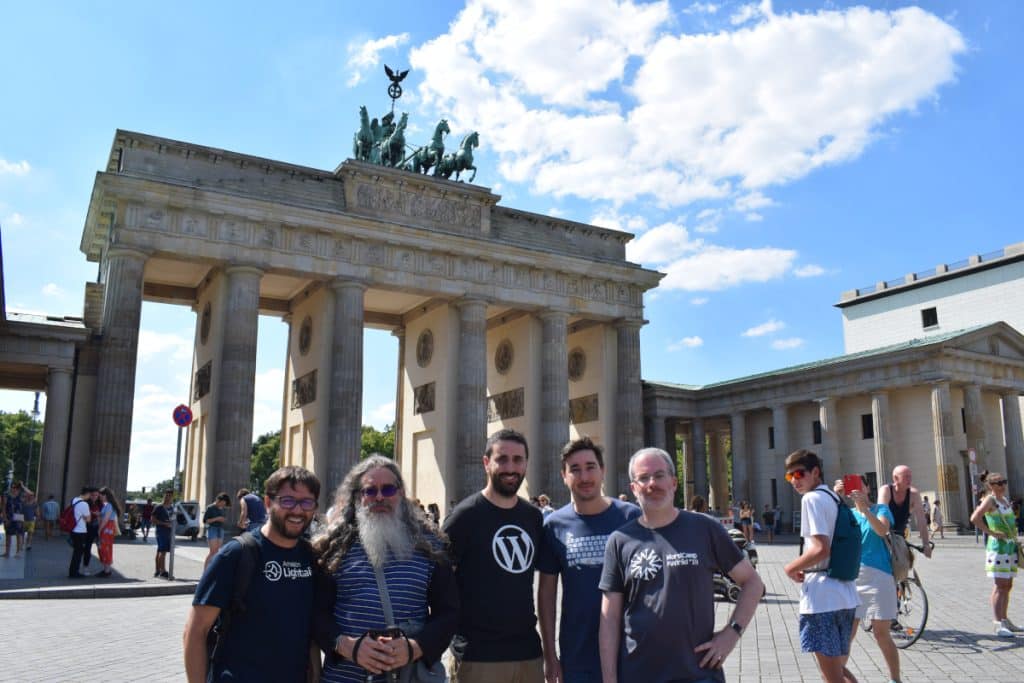
A few years ago, in 2019, I visited Berlin when I went to my first WordCamp Europe. I thoroughly enjoyed the experience with my wonderful WordPress friends: Juan Hernando, Carlos Longarela, Jorge González and, that year, of course, the great José Luis. I shared some photos from this trip in the Basel article.
After WordCamp, you always try to soak up the city hosting the event, and with Jorge as our guide, we went in search of the most important places in that beautiful metropolis, “the poor but sexy city”, as its controversial mayor Klaus Wowereit used to say between 2001 and 2014.
On that route, we happened upon the New Guardhouse building in Berlin (in German, Neue Wache); it is one of the city’s most symbolic places, both for its architecture and its historical significance. It is on Unter den Linden, right in the centre of Berlin, near Humboldt University and the Opera House.
It is not a “spectacular” monument in size, but it is one of the most laden with memory and symbolism in Germany.
It was built between 1816 and 1818 by the neoclassical architect Karl Friedrich Schinkel, inspired by Greek temples, and its original purpose was to serve as the guardhouse for the Prussian Royal Palace. It served as a monument to soldiers who fell in the wars against Napoleon.
Like almost everything, it has suffered the political use of the past, and its focus has shifted according to each historical period and its own narrative:
- In 1931, it became a memorial to those who fell in World War I.
- During the Nazi era, it was used as a ceremonial space for the regime.
- In East Germany (GDR), it was used as a memorial to the victims of fascism and militarism, with an eternal flame.
Today, it serves as a place of historical remembrance for Germany, a tribute to the victims of war and tyranny, representing victims without distinction.
Inside, there is a striking sculpture. For me, the most powerful definition of a work of art.
We tend to think of art as a beautiful “work”.
For me, art is anything people do that creates an impact—whatever it may be—on the person who experiences it.
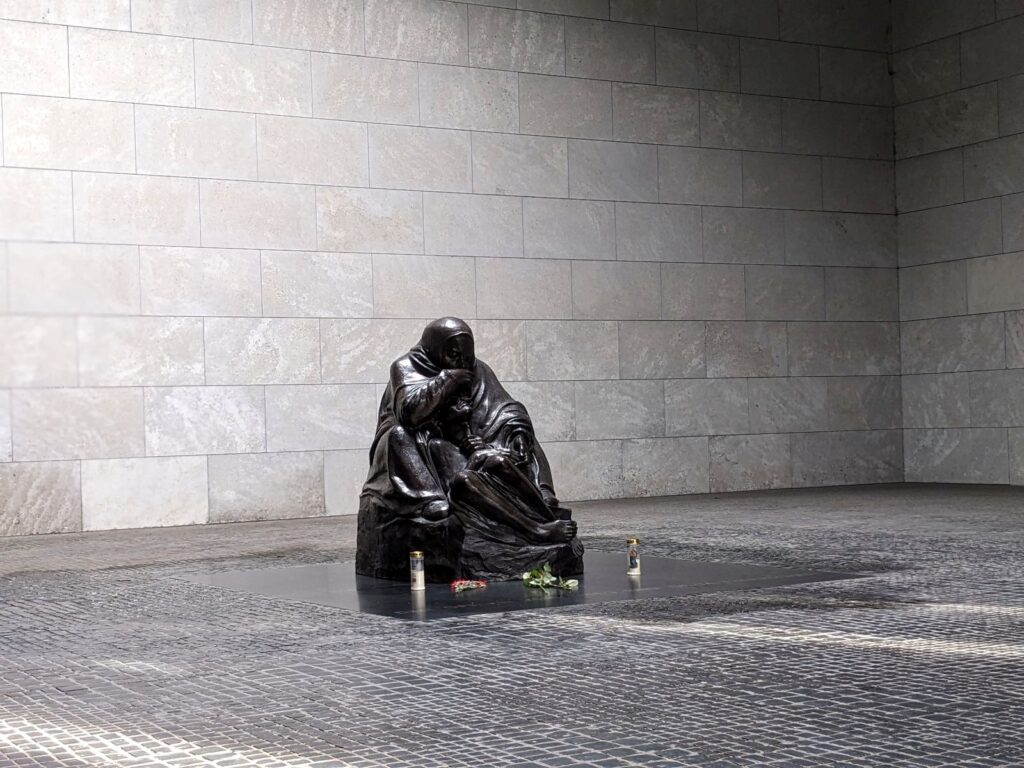
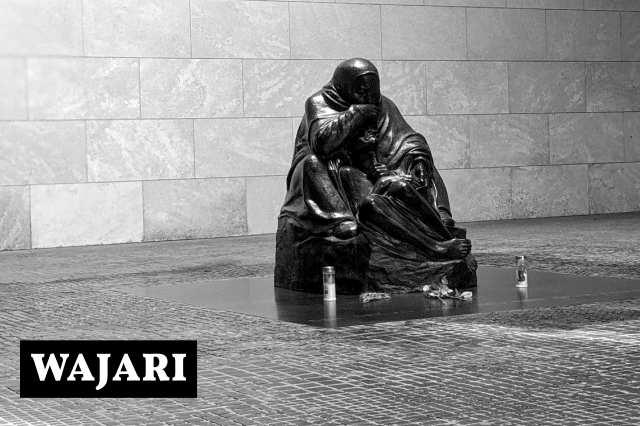
It is a sculpture titled “Mother with Her Dead Son” by Käthe Kollwitz. It is placed beneath an oculus open to the sky, where rain, sun, snow and cold enter. This is no coincidence. It symbolises human suffering exposed without protection.
It had a profound emotional impact on me when I saw it for the first time. It is not common for me to react so emotionally to a work of art. But it captivated me completely. I did not know its story, nor everything it sought to represent. I looked up that information afterwards.
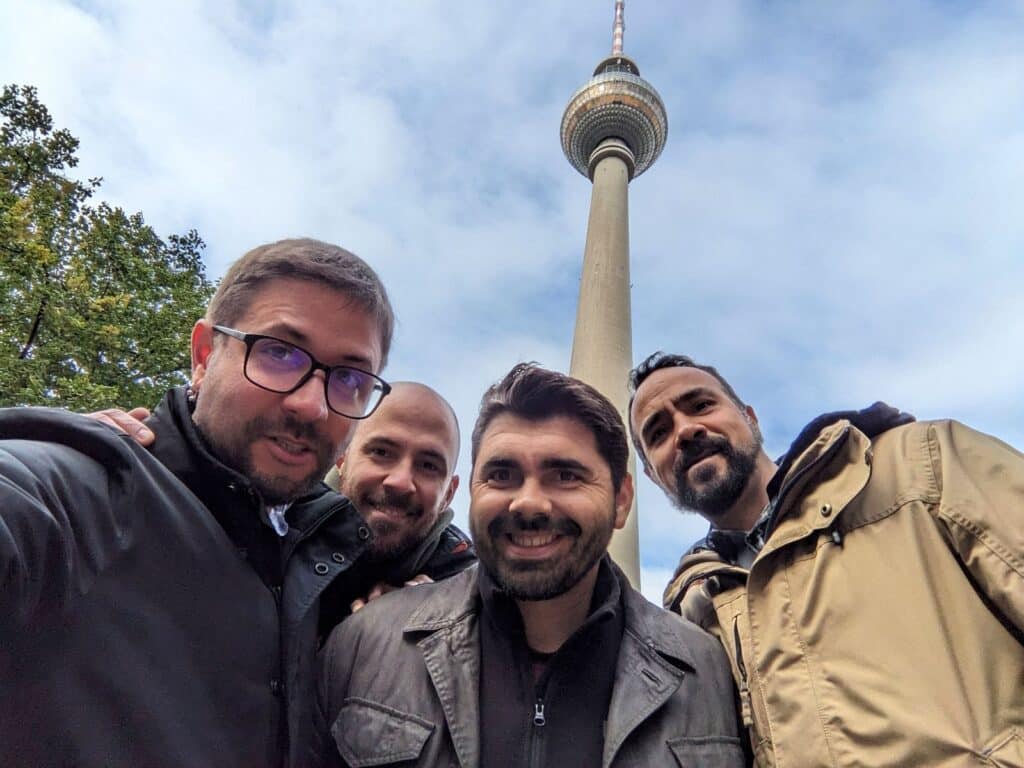
Years after that first visit, I returned to Berlin, this time with my best childhood friends, with whom I usually travel once a year. When I returned, the impact the work had on me was just as powerful—if not even more so—than the first time.
I understand it depends greatly on your emotional or spiritual state. We evolve and change, as the Hindu saying goes:
“Nothing has changed. Only I have changed. Therefore, everything has changed.”
Hindu proverb
The work is important because it does not glorify war; it questions it. It does not celebrate victories, it has no excess of elements, and it plays with emptiness and emotion.
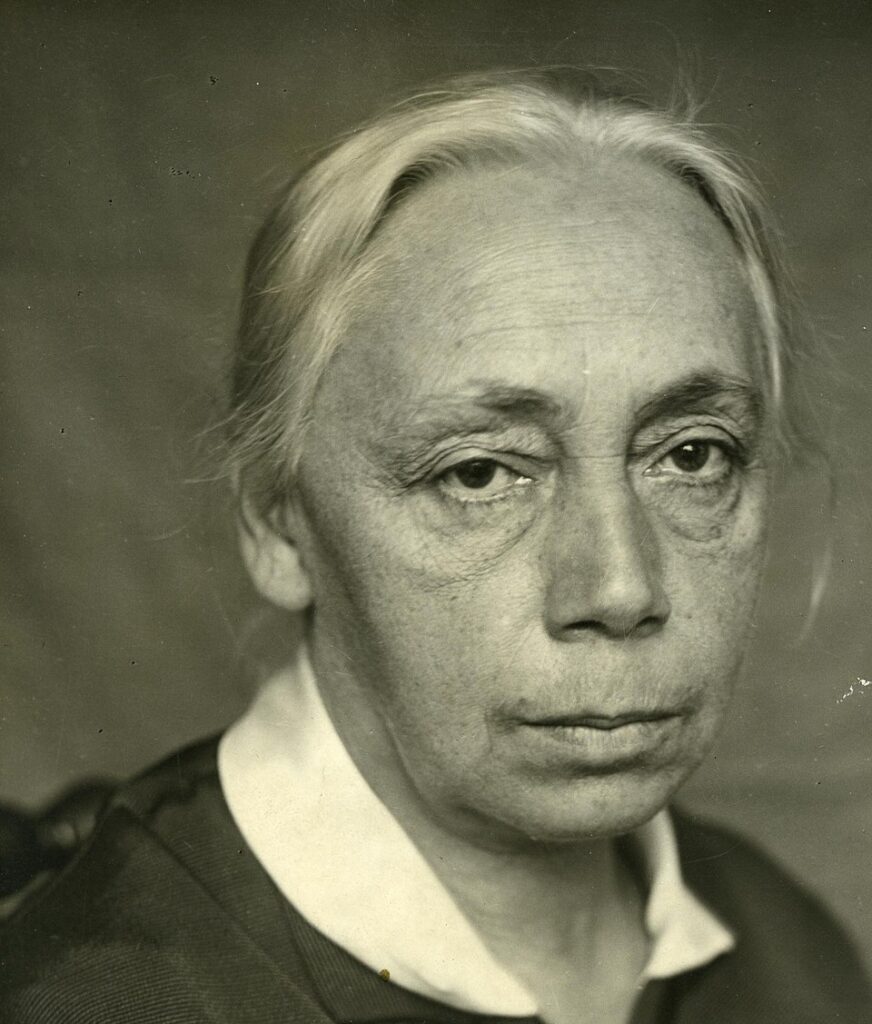
At that point, I began researching the artist Käthe Kollwitz (1867–1945), one of the most moving figures in 20th-century German art.
She was an artist (printmaker, sculptor and draughtswoman) associated with Expressionism; she focused heavily on human suffering (we are all children of our time). Her work is raw, direct and emotional.
Like many artists, there was an element that marked her: the death of her son Peter in 1914, in World War I. The work you can see in the building is inspired by her own loss.
She did not create it as an initial commission. There was a personal need to express the grief for her son.
We cannot compare one death to another, but as a father, it is hard for me to imagine a death more difficult to accept than that of your son or daughter.
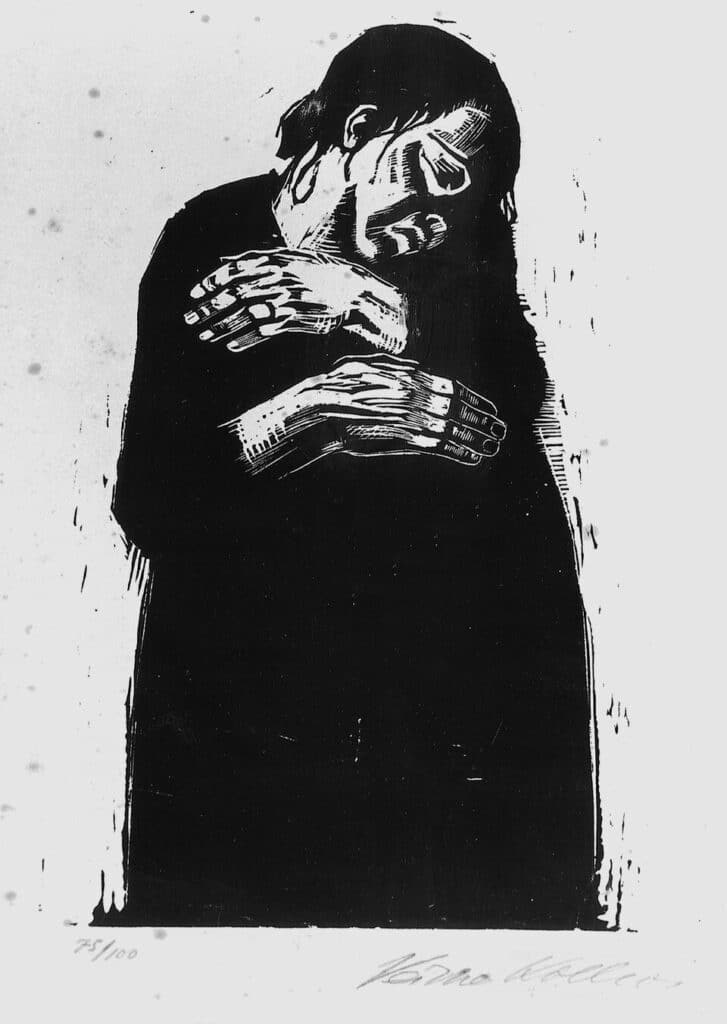
The work is a message against war, without glorifying heroic deaths—none of that bullshit you can see in many places around the world, with their town halls evoking great heroes who gave rise to whatever nation-state is in fashion and “dignifying” the past (especially on horseback—the bloody horse can’t be missing).
From Kollwitz’s personal pain, a work was created that transcends her son—speaking to all sons and daughters killed because of war.
The Nazi regime considered it “degenerate” and removed it from public view, as it did not fit the militaristic vision of the narrative in question.
If you are in Berlin, I strongly recommend that you take the time to experience this impressive work. It is minimalist, silent and painful. It tells a very powerful story and invites reflection—and your most human emotions.
I find it surprising that such an old work remains so relevant today.
We are undoubtedly imperfect beings, full of mistakes and vices. But the fact that, even in 2026, we still witness the wars around us and do not question (with a critical spirit) the validity or appropriateness of our current democracies, political parties, media, or the system as it exists today, shows the many mental and emotional shortcomings we have.
I tend to be very optimistic, and yes, I am convinced that statistics can show us that the world today is a little better than it was in the past. But the fact that, in 2026, we still keep seeing the wars around us saddens me. How far we still have to go, damn it!
I only hope that artists like Käthe Kollwitz continue creating for ever and ever, showing a greater spiritual evolution than the people who cause and promote those conflicts.
Live long and prosper! And may art always be with you.

