
I grew up in an agnostic family, but in search of a good-quality education I ended up studying at a religious school (Augustinians). I was not baptized, nor did I follow the usual Catholic traditions (First Communion, confirmation), but when I had to deal with some paperwork, I was baptized at 15, having to avoid my name because it did not exist in the saints’ calendar.
What a wonderful example of integration!
So my relationship with the Catholic religion has not been very positive in many ways.
Ironically, I took part in spiritual retreats from a young age because I saw a lot of value in that humanitarian work and support. Not all priests were radical; there were some good ones.
I lived alongside religious groups that imposed their religion on Indigenous groups, but at least they made an effort to improve their health, education, and quality of life.
Of course, when you are starting to explore your sexuality and masturbation, and you have a priest telling you that “jerking off” is a sin and that is why you were doing badly at school, in my youthful stupidity I believed all that crap for brief periods.
Oh, fuck! That’s why I’m such a bad student—now I get it. If I’m constantly jerking off, this is normal. 😉
But as I said, even though my relationship with Catholicism rarely went well, spirituality, as I understand it, gave me a path to peace and serenity that I have always been grateful for.
When I was very young, I started reading about yoga, meditation, Sufism, Judaism, Islam, Buddhism… and little by little you find your meaning (your path) in everything. At least that is what happened to me. Everyone, I understand, has a different route.
That said, I never found my path in major religions, but in the teachings of people. Spiritual teachers who show you the way, even if they cannot walk the path for you. It depends a lot on when you receive the message and how open or closed you are to it.
Our Western society is strongly influenced by the Catholic Church in many of the values and beliefs that define us.
While it is true that its influence in 2026 is not the same as it was in 1930, it still casts a veil that permeates our thoughts and values. And sometimes I wonder: Is this something positive? Is it a paradigm that improves our lives or gives them meaning?
Since it is something that shapes human relationships in our immediate environment, or even our relationship with the rest of society’s spheres.
I traveled to Japan recently.
I will write about this later because, for me, it was the best trip of my life (a dream come true) in many ways, and it has sparked thousands of reflections.
Something that blew my mind about that trip—and has had me turning it over ever since I was there—was the difference between religiosity and spirituality, and what implications this can have in a society.


There are two “beliefs” there: Shinto and Buddhism. I call them beliefs because, in truth, I find it very difficult to classify them as religion as we understand it in the Western world, where the rigid structure of Catholicism shapes our concept of what a religion should be—which is a mistake.
Shinto (shinto) is Japan’s native belief system, full of animist beliefs and rituals based on the worship of natural and supernatural forces, ancestors, places, or objects (Dokusho Villalba, 2006). They venerate the kami (spirits or deities), which are present in nature.
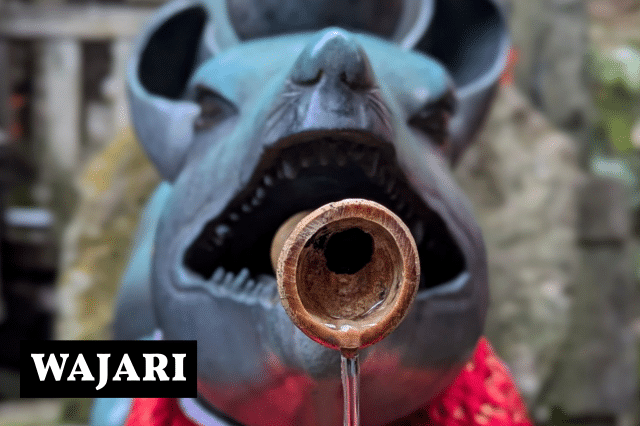
It has no founders or sacred texts, and no hierarchical structure behind it. It seeks people’s purification (with rituals such as washing your hands and mouth). It has shrines and torii that mark the entrance to a sacred space. They use omamori, or protective amulet objects.
With the arrival of Buddhism, which has a long journey from India to the different schools that came from China (a fascinating history), respect and coexistence between the beliefs of both practices has developed.
Today, you can see Shinto temples and Buddhist temples. Each has its own particularities, but both coexist completely normally and respectfully, welcoming practitioners of both approaches—not creating a duality, but a wonderful coexistence.
You can attend birth ceremonies in Shinto and Buddhist funerals without this creating any conflict.
I have been a practitioner of Zen Buddhism for many years, and from here I saw it as something “separate” from the rest of society or everyday life. Something that made me happy was seeing how integrated it was in Japanese society.
But interestingly, when you look into official data—for example from the Agency for Cultural Affairs (registry of temples and shrines)—they indicate:
- Shinto: 48–70%
- Buddhism: 46–70%
- Christianity: 1%
- Other religions: 5–7%
These figures exceed 100% because the same person can be registered in multiple religions (for example, a Buddhist family plus Shinto practices).
And if we stick to social surveys, 70% of people consider themselves non-believers (no religion). So how should we interpret this paradox?
Most people do not believe in dogma and do not identify with a specific religion. But in practical terms, in their day-to-day lives, they are influenced by these beliefs that imbue them with values, hope, and faith.
I was amazed to see thousands of people in the temples going to give thanks, to venerate their deities, to stand in long lines just to offer a bow.
I said to my wife on the trip:
— This is the big difference with us! This is the key to a society that trusts people and their set of values.
As I began this reflection, I cannot be objective about Catholicism because it filled me with hypocrisy and bad experiences. Nor can I be objective about Buddhism, which has given me the opposite—very good life experiences.
But faced with the crisis of values I see in our current Western society, I wonder… could it be that the Japanese are centuries ahead of us in spiritual evolution?
Those beliefs help them live a fuller life. To be grateful, and to be guided by a set of values and respect for other people.
We have a hypocritical church based on founding myths that they use as a strategy for power and wealth.


As Borja Vilaseca says in his book, “Coincidences Don’t Exist: Spirituality for Skeptics”:
“The history of religion is a story driven by the mind, narrated by the ego, and starring all kinds of limiting beliefs and illusory thoughts.”
Borja Vilaseca
In this book, Borja offers a wonderful reflection when he notes: “Our life is built on imaginary social constructs.”
We have many examples of such constructs: language, money. These social agreements allow us to communicate and cooperate on a large scale through shared myths.
“A Christian is nothing more than someone who believes in the story this religion tells and participates in an imaginary reality called Christianity.”
Borja Vilaseca
States, democracy, education systems, political parties, football teams are all collective imaginary realities. We turn them into reality by believing in them.
After this trip, and watching how thousands of young people went to give thanks and venerate something, I wondered with a certain nostalgia:
— Could this be the key? Avoid hierarchies and sacred texts, and return to a set of beliefs and values that define us as people? That help us personally and help us live better with our environment?
In Japan, “religions” (call them whatever you like: philosophy, beliefs, values, spirituality) do not receive money from the state. They fund themselves with the support of their believers.
They do not set rigid rules about what should or should not be done. They are based on a set of beliefs and values that improve our lives and our environment.
They offer us a spiritual path that we may follow or not. It depends on each of us. There is no one telling you what you should or should not do.
Maybe I am wrong, but let me dream of a society guided by these beautiful values of building up, not dividing.
To forget absurd rules that once made historical sense but today are outdated in every respect.
Our Western society has to evolve, democracies have to change, and how wonderful it would be if the major religions that have “dominated” our world gradually dissolved into a set of personal beliefs and values that give us a path of hope, help, and gratitude—not a set of rules that divide us and enable the abuse of power over people.
Live long and prosper! I hope you find your spiritual or religious path. Or whatever the hell you want to call it.

